

The Wellbeing Brief
One email, every Sunday. The same thinking you've been reading here, arriving quietly at the end of the week — on stress, focus, and the things that take more than they give.
No advice you didn't ask for, and nothing that needs acting on.
We'll only ever use your email for the Brief. Unsubscribe any time.
How Do I Know If I Need Therapy?
If you're asking whether you need therapy, that's usually already worth taking seriously. You don't need a diagnosis, a crisis, or a tidy explanation of what's wrong to start — most people who come to us don't have one. Therapy is worth considering when the effort of holding things together is costing you more than it looks like from the outside: when you're managing on the outside, but carrying more on the inside.
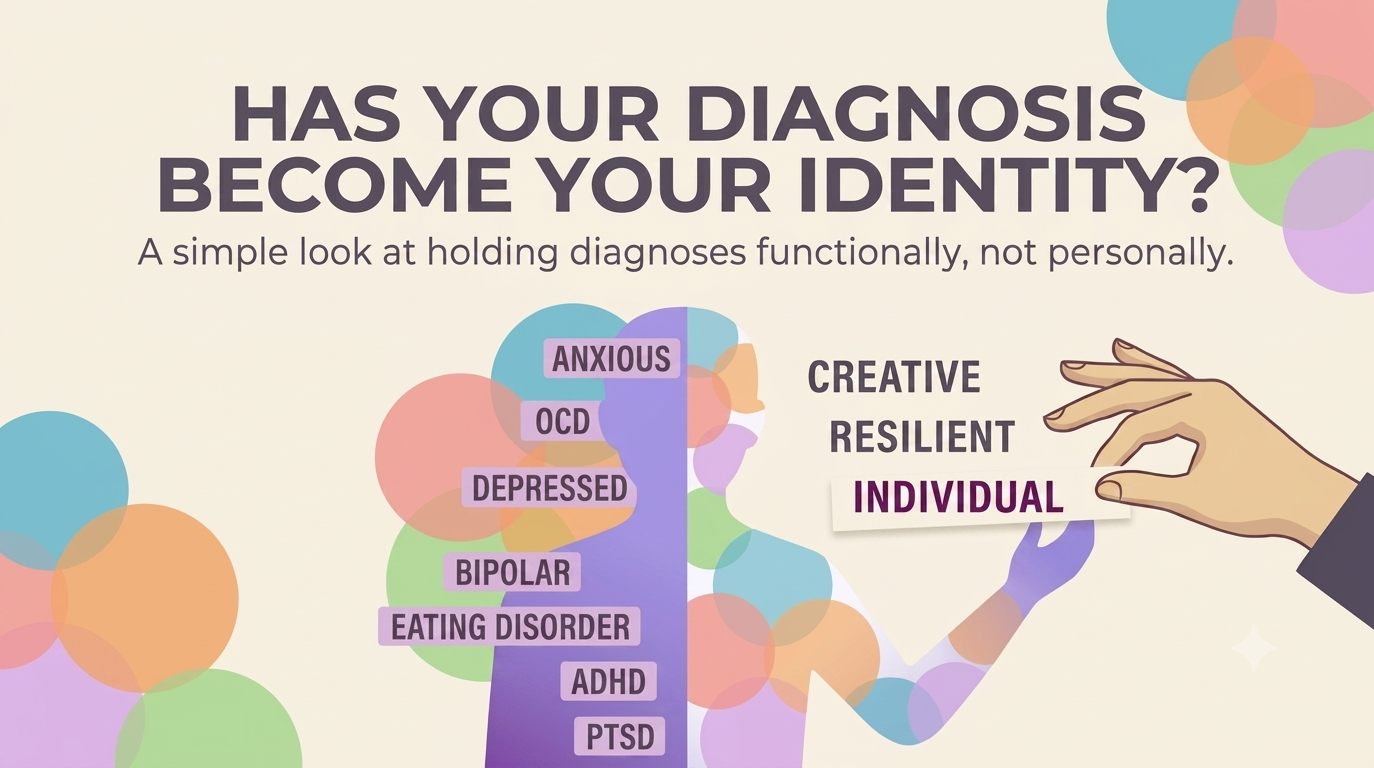
Has your diagnosis become your identity?
Diagnosis works. When something is wrong and you can't name it, you're lost — no way to predict it, no way to treat it, no way to explain it to another person. Being able to say "this is agoraphobia" or "this is OCD" is what lets a clinician act, and what lets a person stop treating their own experience as a private, unexplainable mystery. Most of clinical psychology runs on exactly this logic.
Willpower vs willingness — and why one of them keeps you stuck.
The high-functioning operating system runs on willpower. Push through, optimise around, hold steady when the wave hits. It is, in many ways, the reason you have the life you have. It is also, in a quieter way, the reason a piece of that life feels stuck.
Acceptance & Commitment Therapy: What is it?
ACT is one of the most well-researched approaches in modern psychology. At Eunoia Health, it forms the foundation of everything we do. Here's what it actually means — and what it looks like in practice.
Most people who reach out to Eunoia Health aren't in crisis. They're thoughtful, capable adults who've noticed something: life is working, but it feels harder than it should. The mental load doesn't ease. The same patterns keep showing up. There's a gap between how things look from the outside and how they actually feel.
Mindfulness in ACT: it's not what you think.
If the word mindfulness makes you think of meditation cushions, guided audio tracks, or the instruction to "just be present" — you're not alone. That's the version most people have encountered. It's also not quite what we mean at Eunoia Health.
In the ACT framework, mindfulness isn't a relaxation technique or a wellness practice. It's a psychological skill — one with a specific function, a clear rationale, and a growing body of research behind it. Understanding the difference matters, because the two versions lead to quite different outcomes.