

The Wellbeing Brief
One email, every Sunday. The same thinking you've been reading here, arriving quietly at the end of the week — on stress, focus, and the things that take more than they give.
No advice you didn't ask for, and nothing that needs acting on.
We'll only ever use your email for the Brief. Unsubscribe any time.
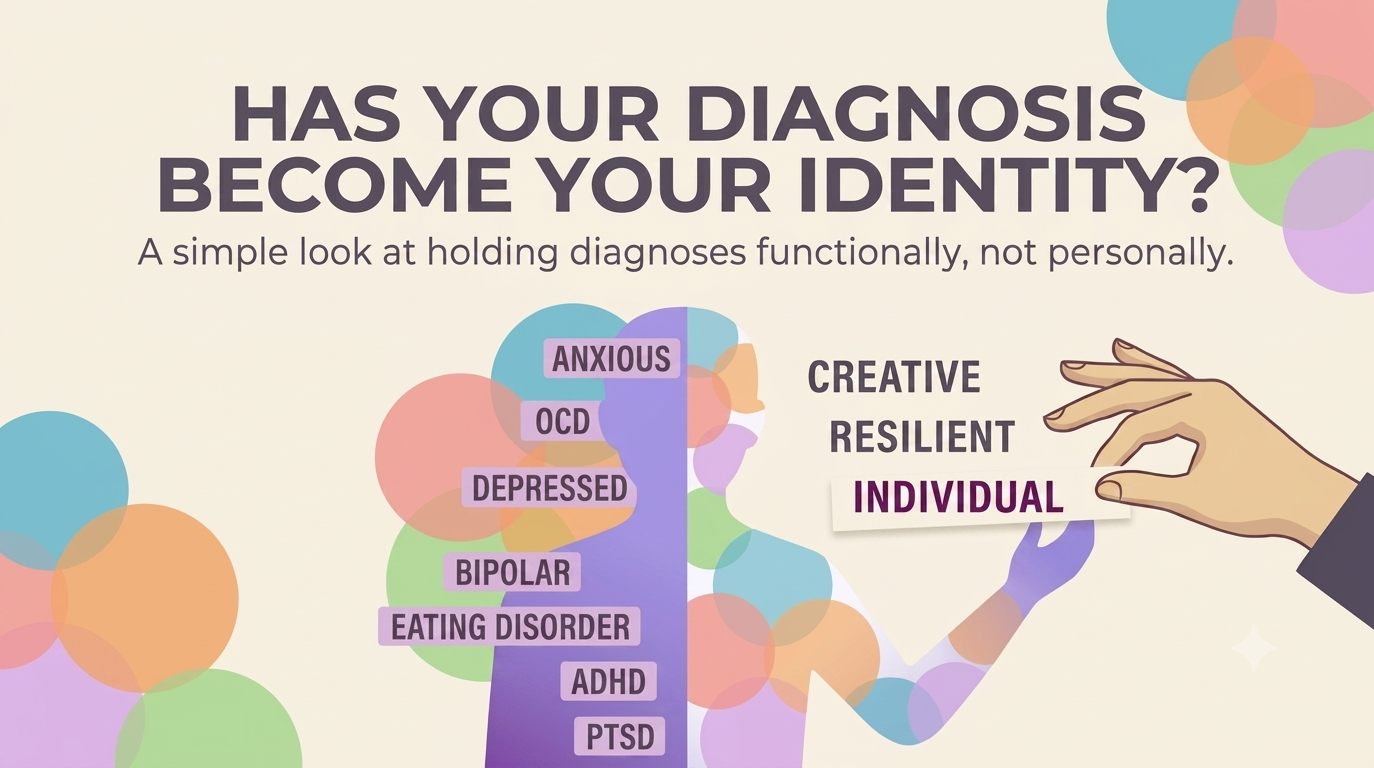
Has your diagnosis become your identity?
Diagnosis works. When something is wrong and you can't name it, you're lost — no way to predict it, no way to treat it, no way to explain it to another person. Being able to say "this is agoraphobia" or "this is OCD" is what lets a clinician act, and what lets a person stop treating their own experience as a private, unexplainable mystery. Most of clinical psychology runs on exactly this logic.
The procrastination that looks like preparation
It's 9pm. You've been meaning to start the proposal since noon. In between, you've colour-coded your inbox, made a very detailed to-do list, reorganised the tabs on your browser, and done approximately everything except the actual thing.
This is sometimes called productive procrastination — and it's worth understanding, because it's not laziness. It's your brain doing something quite sophisticated, for reasons that make a lot of sense.
Why Your Brain Won't Switch Off At Night
It's 11.47pm. The light is off, your phone is on the bedside table, you have an early start. And your mind is sprinting. You're replaying a conversation from yesterday afternoon. You're rehearsing tomorrow's meeting. You're thinking about a friend you haven't called. You're planning the weekend, then planning a holiday eight months away, then back to the conversation from yesterday.